

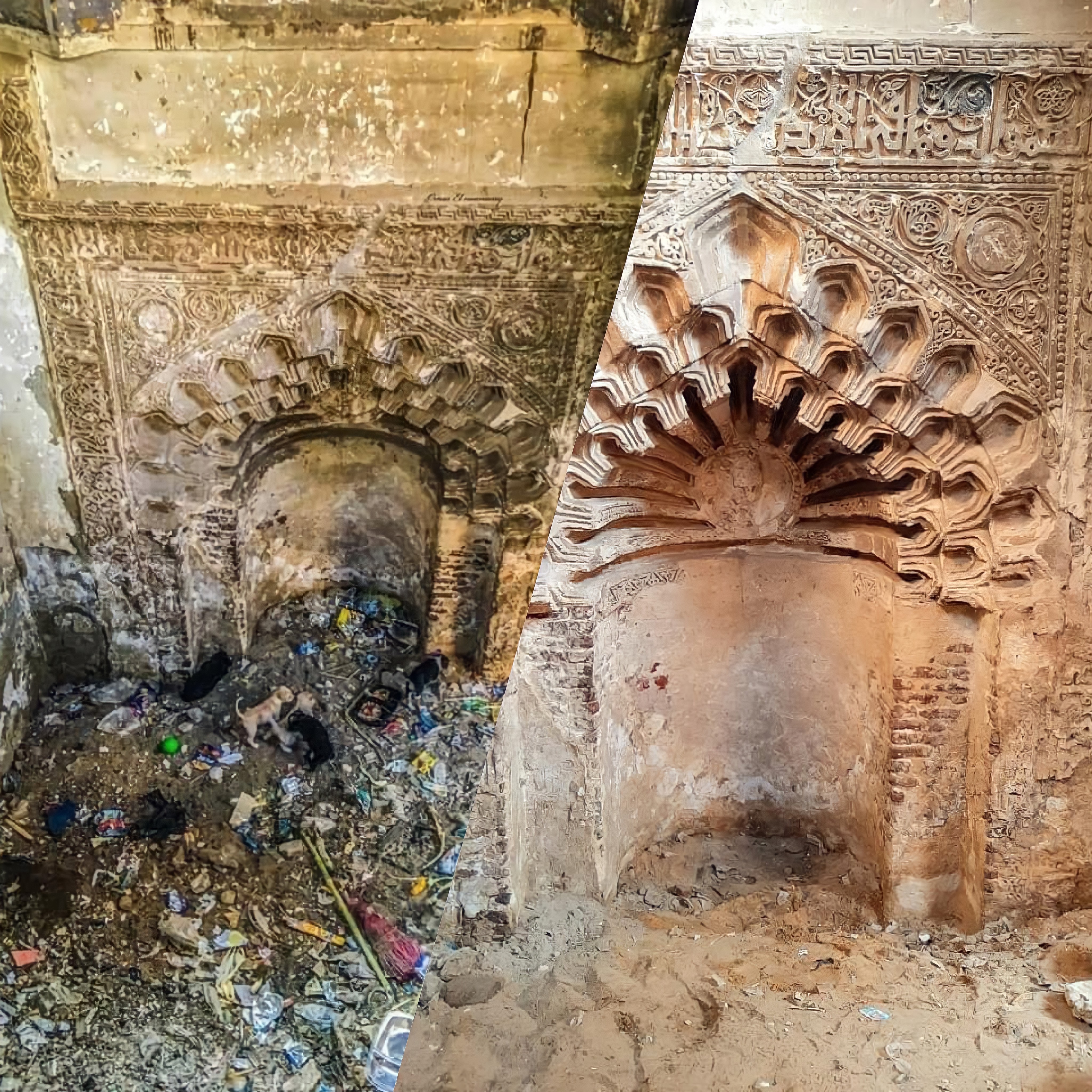
You may casually pass by them, hear about them, or not even know of their existence, but Cairo is home to some of the world’s most precious and overlooked heritage. Sadly, many of them are neglected — and sometimes, unfortunately — used as a garbage dump. Cairo Biography, an Egypt-born initiative, is passionately self-funding its way to sustainably save these historical gems for no financial return.
“It was of the Mausoleum of Al-Hasawati and showed the 900-year-old historical location filled to the brim with garbage and dead animals. The scene felt quite unfortunate and embarrassing.” — Hossam Abdelazim, Cofounder of Cairo Biography.
We talked to one of Cairo Biography’s cofounders, Hossam Abdelazim. Abdelazim’s usual nine-to-five revolves around being a tour guide with an interesting trajectory. After graduating from the faculty of tourism and hotel management, he went on to attain a diploma and a master’s degree from the Faculty of Archaeology and Antiquities of Cairo University.
How did the three-month-old initiative start, what challenges do they face, and how can you help them? Abdelazim gave us an inside look…

How the Cairo Biography Journey Started
The trigger was a trending social media image that pushed Abdelazim and his friends to roll up their sleeves and get to cleaning. Now, they’ve become a social media sensation that garnered over 12,000 followers on Facebook in just three months. But what was that image?
The Irritating Image
It all started with Abdelazim noticing a trending image on social media. “It was of the Mausoleum of Al-Hasawati and showed the 900-year-old historical location filled to the brim with garbage and dead animals. The scene felt quite unfortunate and embarrassing,” recalled Abdelazim.
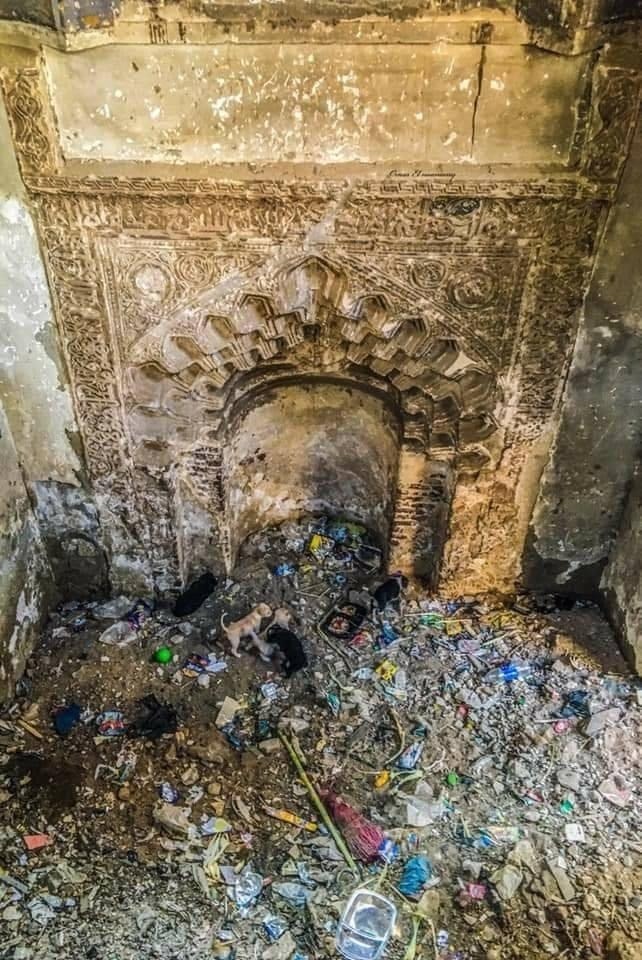
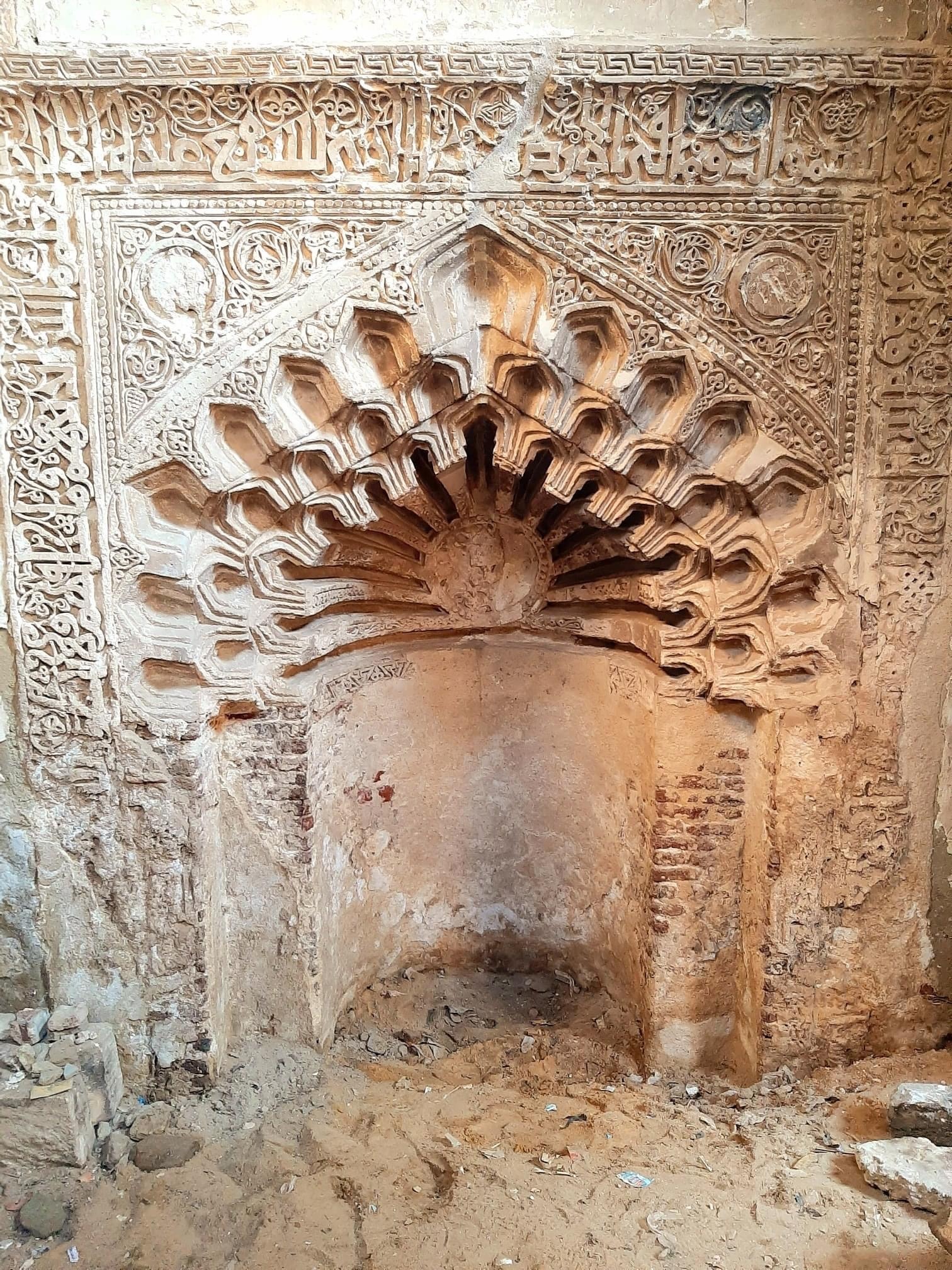
Built by Mohamed Ali Pasha’s son to serve as a family cemetery, the Mausoleum of Al-Hasawati is situated near El-Imam El-Shafey square. The Fatimid-era monument contains a beautifully-crafted wooden Mihrab decorated with fine ornaments made of white gypsum and other valuable components. These components are almost no longer used in today’s world. One of its nostalgic features was its vast courtyard that was once a beautiful garden. So, one could easily understand their frustration.
A dear friend of his, Abdelaziz Fahmy, had sent him the image. Abdelazim’s response to him was, “Why don’t we go ahead and clean it up?” And so, they started seeking practicalities with the fear of their first mission being rejected by the relevant governmental authorities hovering over them. But they decided to pursue it anyway.
The First Mission and Getting Governmental Support
Taking their first step on a growing ladder of accomplishments, they managed to reach the vice president of Egypt’s Islamic Antiquities division in the Ministry of Tourism and Antiquities. They also got in contact with the Supreme Council of Antiquities. To their surprise, the governmental authorities gladly welcomed their initative within 24 hours!
Following merely two weeks of sturdy preparation to make their vision become a reality, Cairo Biography witnessed the first on-ground activation in late September. Although only nine volunteers came to the rescue, Cairo Biography’s first 8-hour clean-up proved successful far beyond their anticipation. The aforementioned Mausoleum was home to a whopping ton of garbage. But they got rid of it all.
A Vision Built on Self-Funding and Sustainability
We also asked Abdelazim how they plan to raise funds for their project and ensure its sustainability. How do they pay for removing the garbage and what happens after?
Completely Self-Funded
Cairo Biography operates as a self-funded non-profit, and they plan to remain so in the short-run. The founders take care of most of the cleaning equipment and materials needed. All volunteers are required, however, to bring their own COVID-19 personal protective equipment. “And we encourage them to bring along anything that could help with the mission if possible,” clarified Abdelazim.
The Pillars of Sustainability
But what happens after the first clean-up? Do all these priceless heritage sites return to the garbage dump they were? Cairo Biography’s answer to these questions lies in their three main pillars for maintaining sustainability…
First: Starting With Yourself
Their first pillar is simple: start cleaning up yourself. The rest will follow. After acquiring the right permissions, they immediately took to restoring the landmark’s original state as much as possible. This is visible in the location’s post-cleanout state. According to Abdelazim, “the place lights up.”
Second: Raising Awareness
To make sure the sites’ neighbors take good care of it after the clean-up, the Cairo Biography team converses with them on why they should conserve the historical place and how to do so.
Third: Following-Up
To them, following up with the ministry before, during, and after cleaning is essential. When commencing the cleaning process, a government associate accompanies them throughout and reports their recommendations for further improvement. These might include comments on how to maintain infrastructure, lighting, and so on.

Acknowledging their efforts, the Ministry of Antiquities was very pleased and expressed its extended support for the initiative. And one of their recommendations, a protective wall around the Mausoleum, is currently under construction.
After attaining tangible results and posting about them on social media, Cairo Biography is now going viral. Their end-game is to specialize in Egypt’s infinite antiquities with the help of volunteers from across all ages and walks of life.
The volunteer-run cause extended its visits and work onto many neglected areas with historical value such as “Sheikho Al-Omari Al-Nassiri” in Bab Al-Wadaa Street of Al-Hataba area at the Citadel of Cairo. They also paid a reviving visit to Sabil Hassan Agha Al-Arzenkani; an Islamic-era architectural water-dispenser, recently.
Because of his innate passion and extensive experience in history and antiquities, Abdelazim reflected on both the professional and personal gainings he’s obtained through Cairo Biography’s journey. “What we do not only leads to personal satisfaction, it also has an educational aspect to it. You’re literally unearthing unexpected items beneath the surface through cleaning and enriching your scientific knowledge on the subjects.”
Want to tag along on their next trip? Then just contact them through their Facebook page here to volunteer!